
A total of 750 pilgrims have been selected through a computerised draw for the upcoming Kailash Manasarovar Yatra in Tibet, marking the resumption of the pilgrimage after a five-year gap. The Yatra's resumption is seen as an attempt to normalize India-China relations, which were strained by the eastern Ladakh border standoff. The pilgrimage will begin in June and continue until August, with pilgrims traveling in five batches via the Lipulekh route and ten batches via the Nathu La route. The selection process was deemed "fair, computer-generated, random, gender-balanced" by the Ministry of External Affairs (MEA), which organized the pilgrimage.

India has stated its neutral stance on religious matters following the Dalai Lama's announcement of his succession plan, which China has rejected. The statement comes as the Dalai Lama approaches his 90th birthday, with China urging India to exercise caution on Tibet-related issues.

India and China have held their first diplomatic talks since withdrawing troops from two face-off points in eastern Ladakh, reflecting on the lessons learned from the border row to prevent future incidents. The two sides agreed to maintain peace and tranquillity in border areas, prepare for the next meeting of Special Representatives on the boundary question, and highlighted the importance of regular exchanges and contacts at diplomatic and military levels. The talks come after the completion of the disengagement process from the last two friction points, following an agreement finalized in October 2022.

China on Monday conducted day-long large-scale military drills aimed at surrounding Taiwan by deploying an aircraft carrier group, besides army, navy, air force and missile forces, in an apparent response to Taiwanese President Lai Ching-te's remarks that Beijing has no authority to represent Taipei.
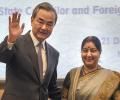
China has been trying to build lobbies of influence and mould public opinion in India since at least 2017, and large sums have been invested in the effort, reveals former RA&W officer Jayadeva Ranade.

Taipei on Friday termed China's military exercises around the island nation 'highly provocative' after some Chinese aircraft and warships crossed the median line of the Taiwan Strait.

China also removed Finance Minister Liu Kun and appointed Lan Fo'an in his place. Liu is the third senior Cabinet minister to be replaced without any explanation.
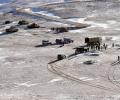
The Indian and Chinese troops are locked in an over three-year confrontation in certain friction points in eastern Ladakh even as the two sides completed disengagement from several areas following extensive diplomatic and military talks.

India and China held talks in New Delhi to discuss the lessons learned from the eastern Ladakh military standoff and prevent its recurrence. The two sides also prepared for the next meeting of the Special Representatives on the boundary question. The talks took place under the framework of the Working Mechanism for Consultation and Coordination on India-China Border Affairs (WMCC). Both sides highlighted the importance of regular exchanges and contacts at diplomatic and military level to maintain peace and tranquility in the border areas.

China and India were able to "reduce differences" and build "some consensus" on disengaging troops from friction points to end the standoff in eastern Ladakh and agreed to maintain dialogue to reach a resolution acceptable to both sides at an "early date", the Chinese defence ministry said on Thursday.
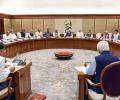
India has reached out to key global powers, including members of the UN Security Council, and apprised them about the reasons behind its military strikes on nine terror targets in Pakistan and Pakistan-occupied-Kashmir in retaliation for the Pahalgam terror attack. New Delhi also conveyed to the countries that it will retaliate if Islamabad escalates the already tense situation.
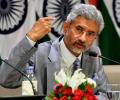
Chinese Foreign Minister Wang Yi and his Russian counterpart Sergei Lavrov will be the other two participants at the conference. Uncertainty had loomed over the meeting following the cross border clash between Indian and Chinese troops in Galwan Valley on Monday evening.

Why can't the Indian government propose to the Chinese a corridor circumambulating the Holy Mountain where people from both sides could perform the yatra again? asks Claude Arpi.

National Security Advisor Ajit Doval arrived in Beijing on Tuesday to take part in the India-China Special Representatives' talks to be held on Wednesday aimed at restoring the bilateral ties stalled for over four years' due to the military standoff in eastern Ladakh.
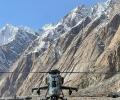
Defence sources stated that the disengagement involves removing infrastructure and withdrawing troops from both sides. The process is expected to be completed by Tuesday.
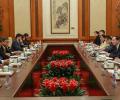
In the talks, China emphasised that the two sides should proceed from the fundamental interests of China, India and adhere to the strategic height and long-term perspective of China-India relations, the readout said.

On Saturday, Ministry of External Affairs spokesperson Randhir Jaiswal told the media in New Delhi that the Indian Army has commenced verification patrolling at Depsang, the second friction point in eastern Ladakh.

India and China on Monday decided to resume the Kailash Mansarovar Yatra as the two sides agreed to take certain people-centric steps to 'stabilise and rebuild' ties.

While the year book did not comment on the boundary negotiations, it pointed out that the year 2003 witnessed a \n\n'momentum of positive development in the friendly, good-neighbourly and mutually-beneficial cooperation between \n\nChina and India'

Chinese Foreign Minister Wang Yi will attend a two-day trilateral meeting of the foreign ministers of Russia, India and China in New Delhi from November 10 to discuss regional and international issues.

Bank of Kunlun was placed under sanctions yesterday for transactions with Iran.

Qin, 57, was made the foreign minister in December last year, superseding many seniors, earning the distinction of a rising star in the ruling Communist Party of China.
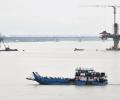
India has expressed concerns over China's plan to build a mega dam on the Brahmaputra River in Tibet, stating that it will continue to monitor and take necessary measures to protect its interests. New Delhi has urged Beijing to ensure that the interests of downstream states are not harmed by activities in upstream areas. The dam, estimated to cost USD 137 billion, has raised apprehensions about its impact on the ecological balance of Arunachal Pradesh and Assam, through which the Brahmaputra flows. India has repeatedly expressed its concerns to China through diplomatic channels, highlighting the need for transparency and consultation with downstream countries.

India has been raising with China the plight of approximately 22,000 Indian students enrolled in Chinese universities who are unable to go back for physical classes. However, the neighbouring country has till date refused to let them enter.

China on Monday said it is planning to allow a small number of foreign students with 'actual needs' who are stuck in their countries for about two years due to its COVID visa bans to return to the country.

China on Tuesday announced that its Defence Minister General Li Shangfu will visit India this week to attend the meeting of SCO defence ministers from April 27 during which he is expected to hold talks with his Indian counterpart Rajnath Singh on ending the prolonged eastern Ladakh standoff which has severely strained bilateral ties.
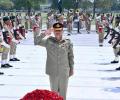
Sections in the US State Department and Pentagon have always felt more comfortable dealing with all powerful Pakistani generals instead of elected civilians, points out Rana Banerji, who headed the Pakistan desk at RA&W.
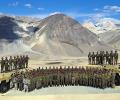
Her comments come a day after External Affairs Minister S Jaishankar said in Geneva that roughly 75 percent of the "disengagement problems" with China are sorted out but the bigger issue has been the increasing militarisation of the frontier.
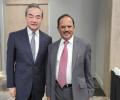
Doval is in Beijing for the 23rd round of the Special Representatives' talks being held after a gap of five years.

China has reiterated its plan to build the world's largest dam over the Brahmaputra River in Tibet, near the Indian border. The Chinese Foreign Ministry has assured that the project, estimated to cost around USD 137 billion, will not have any negative impact on downstream countries, India and Bangladesh. The ministry has stated that the project has undergone rigorous scientific verification and will be conducive to disaster prevention and mitigation, as well as climate change response. India has expressed concerns about the dam, raising the issue during talks with the visiting US National Security Advisor, Jake Sullivan. China has maintained that the project will not negatively affect the lower reaches and has committed to maintaining communication with downstream countries.

China on Monday dismissed the existence of a 'median line' in the volatile Taiwan Strait after Taiwan's defence ministry said it detected a record 103 Chinese warplanes flying around the self-ruled island in a 24-hour period.
Days after India and China agreed to have maritime cooperation, Beijing has favoured greater military ties with New Delhi, saying such exchanges would help build more "confidence and trust" between the two countries.
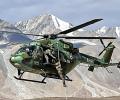
India has lodged a "solemn protest" with China over the establishment of two new counties in the Hotan prefecture, as parts of these regions fall within India's union territory of Ladakh. The Indian government asserted that the creation of these counties will not impact its sovereignty over the area and does not lend legitimacy to China's "illegal and forcible" occupation.

Nine Chinese engineers were among 13 people killed on Wednesday when a bus carrying construction workers in northwest Pakistan's mountainous region was "attacked", according to officials and eyewitnesses.
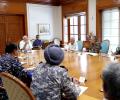
'One good outcome of Operation Sindoor -- perhaps, its best outcome -- could be that India has resumed meaningful contact directly with Pakistan at the military-to-military level,' observes Ambassador M K Bhadrakumar.

Chinese Foreign Minister Wang Yi will be visiting New Delhi on Sunday as a special envoy of President Xi Jinping to establish political contacts with the new Indian government amid hopes here of an upswing in bilateral ties due to Prime Minister Narendra Modi's familiarity with China.

After the disengagement process is completed, the two armies are likely to hold further talks to take the process further.

Jaishankar said that both sides also exchanged views on the next steps in the India-China bilateral ties.

The disengagement process from both the north and south banks of Pangong Lake was completed by the two nations and further disengagement is underway at other friction points.

Scores of chartered accountants, company secretaries and cost accountants are currently under the regulatory scanner for alleged violations of the companies law with respect to setting up of certain Chinese companies and their subsidiaries in India, according to officials. The apex bodies of chartered accountants and company secretaries, ICAI and ICSI, have together received around 400 complaints on the issue and necessary actions have been initiated. The Institute of Cost Accountants of India has also initiated action against some of their members in the matter.
